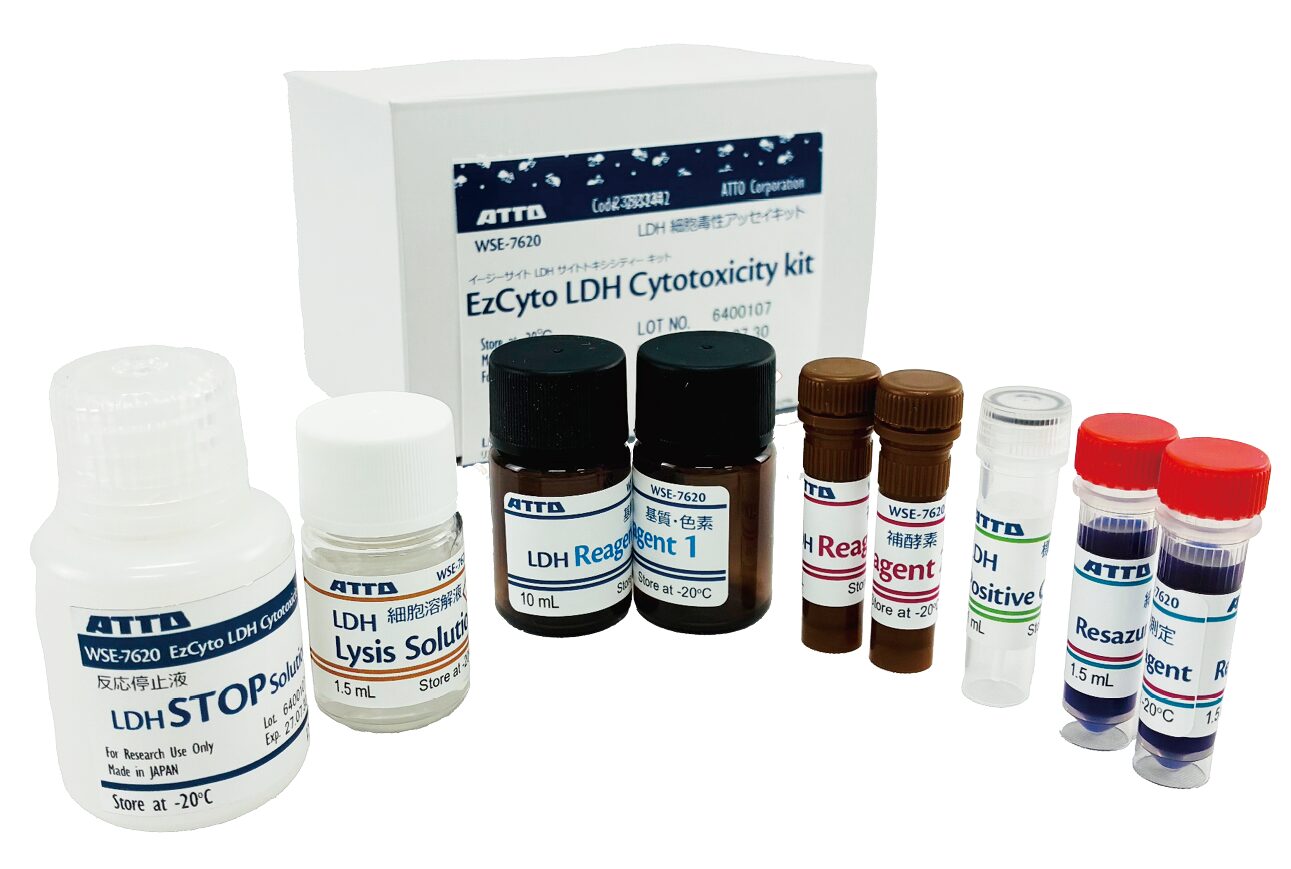
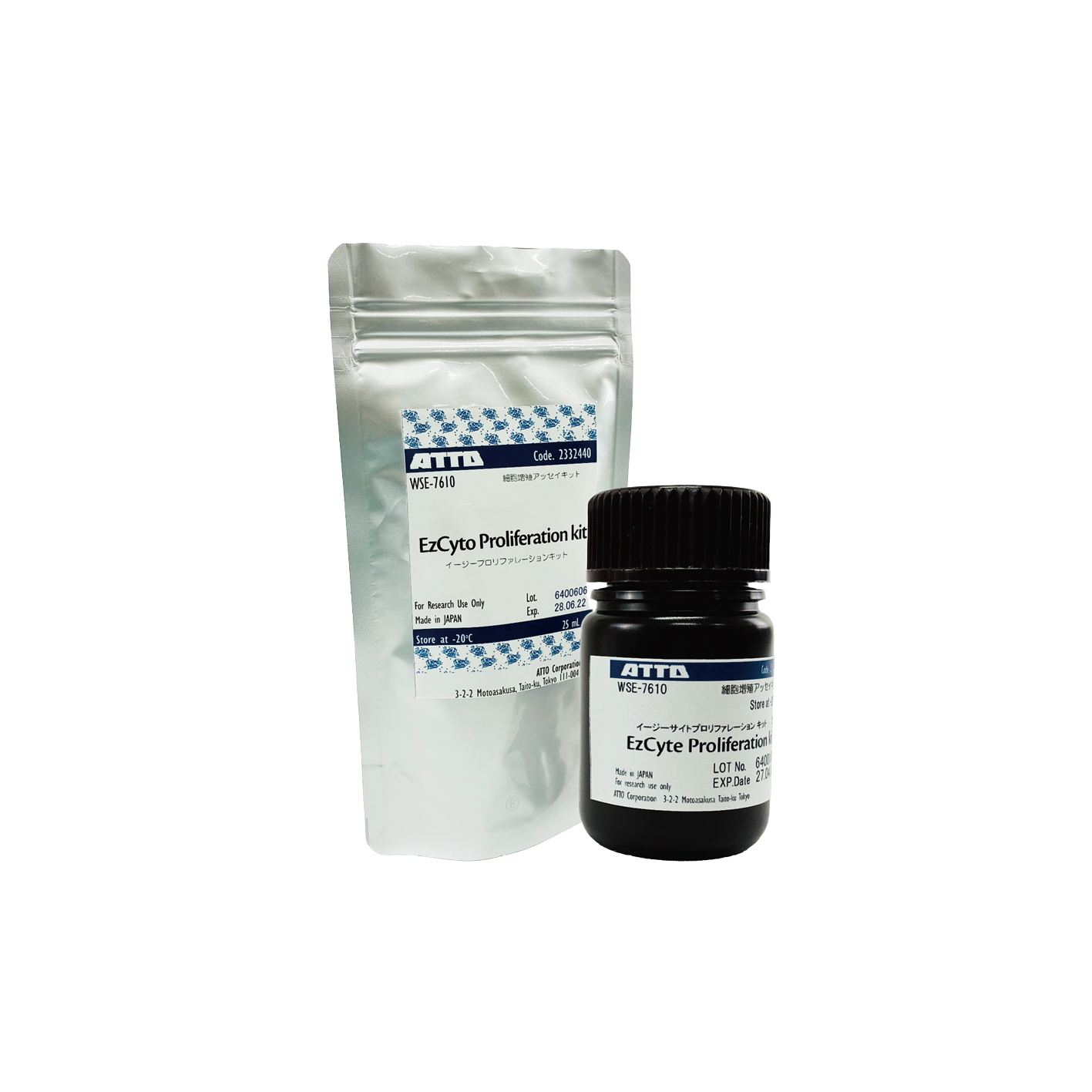
WSE-7610 EzCyto Proliferation Kit
Purpose and Application
- Quantitative assessment of cell viability and proliferation using a resazurin assay.
Features
-
Quantitative measurement based on viable cell number and metabolic activity
-
Supports both colorimetric (absorbance) and highly sensitive fluorescence detection
Absorbance: 570 nm (measurement) / 600 nm (reference)
Fluorescence: Ex. 530–560 nm / Em. 590–610 nm -
Blue-colored reagent allows easy visual confirmation of reaget addition, helping prevent handling errors
-
Simple workflow with no cell washing or solubilization required
-
Applicable to mammalian cells, bacteria, fungi, and plant cells
-
Ready-to-use, single-solution reagent system
-
Suitable for multi-sample screening and cell viability/proliferation assays
-
Stable for 12 months when stored frozen
-
Stable for 6 months under refrigerated conditions after thawing
Description
Blue resazurin is reduced by oxidoreductase enzymes present in the mitochondria and cytoplasm of viable cells, forming resorufin, a pink and highly fluorescent compound. This reaction reflects cellular metabolic activity, and the amount of resorufin produced increases with the number and metabolic activity of viable cells. By measuring the fluorescence intensity or absorbance of resorufin, the number of viable cells, cell viability, and cell proliferation can be quantitatively assessed.
-のコピー.png "吸光スペクトル(レサズリン) のコピー")
Absorption Spectra of Resazurin / Resorufin
Absorbance: 570 nm
Reference wavelength: 600 nm
-のコピー.png "蛍光スペクトル(レサズリン) のコピー")
Fluorescence Spectrum of Resorufin
Excitation (Ex): 530–560 nm
Emission (Em): 590–610 nm
Data
-のコピー.png "細胞増殖(レサズリン) のコピー")
-のコピー.png "細菌増殖(レサズリン) のコピー")
Two-fold serial dilutions of each cell line were seeded in a 96-well plate and incubated with the assay reagent for 2 hours. Absorbance was then measured at 570 nm with a reference wavelength of 600 nm (A570/A600).
For all cell lines tested, absorbance increased with increasing cell number, demonstrating a cell number-dependent response. Differences in absorbance were also observed among the cell lines, reflecting variations in cellular metabolic activity.
Two-fold serial dilutions were prepared from exponentially growing Escherichia coli, Pseudomonas aeruginosa, Enterococcus faecalis, and Staphylococcus aureus, starting at 5–10 × 10⁷ cells/mL. The EzCyto Proliferation Kit was added to each bacterial suspension, followed by a 3-hour incubation before absorbance measurement.
For all bacterial species tested, absorbance increased with increasing bacterial cell number, demonstrating a viable cell number-dependent response.
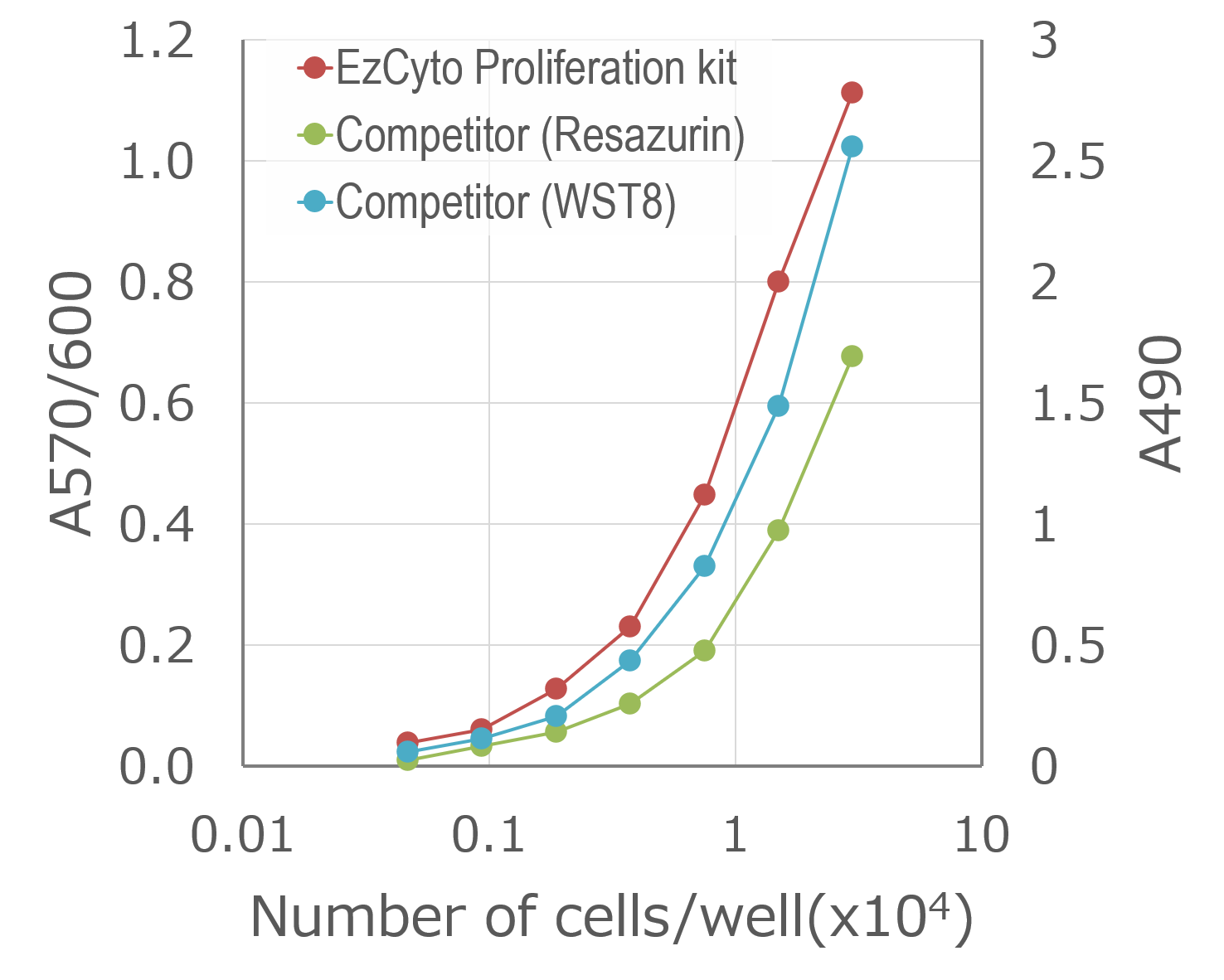
Two-fold serial dilutions of HepG2 cells were seeded in a 96-well plate and incubated with either the EzCyto Proliferation Kit or a competitor product for 3 hours before measuring absorbance. The EzCyto Proliferation Kit showed comparable detection sensitivity to the competitor product while maintaining a linear response over a wider range of cell numbers with less signal saturation at high cell densities.
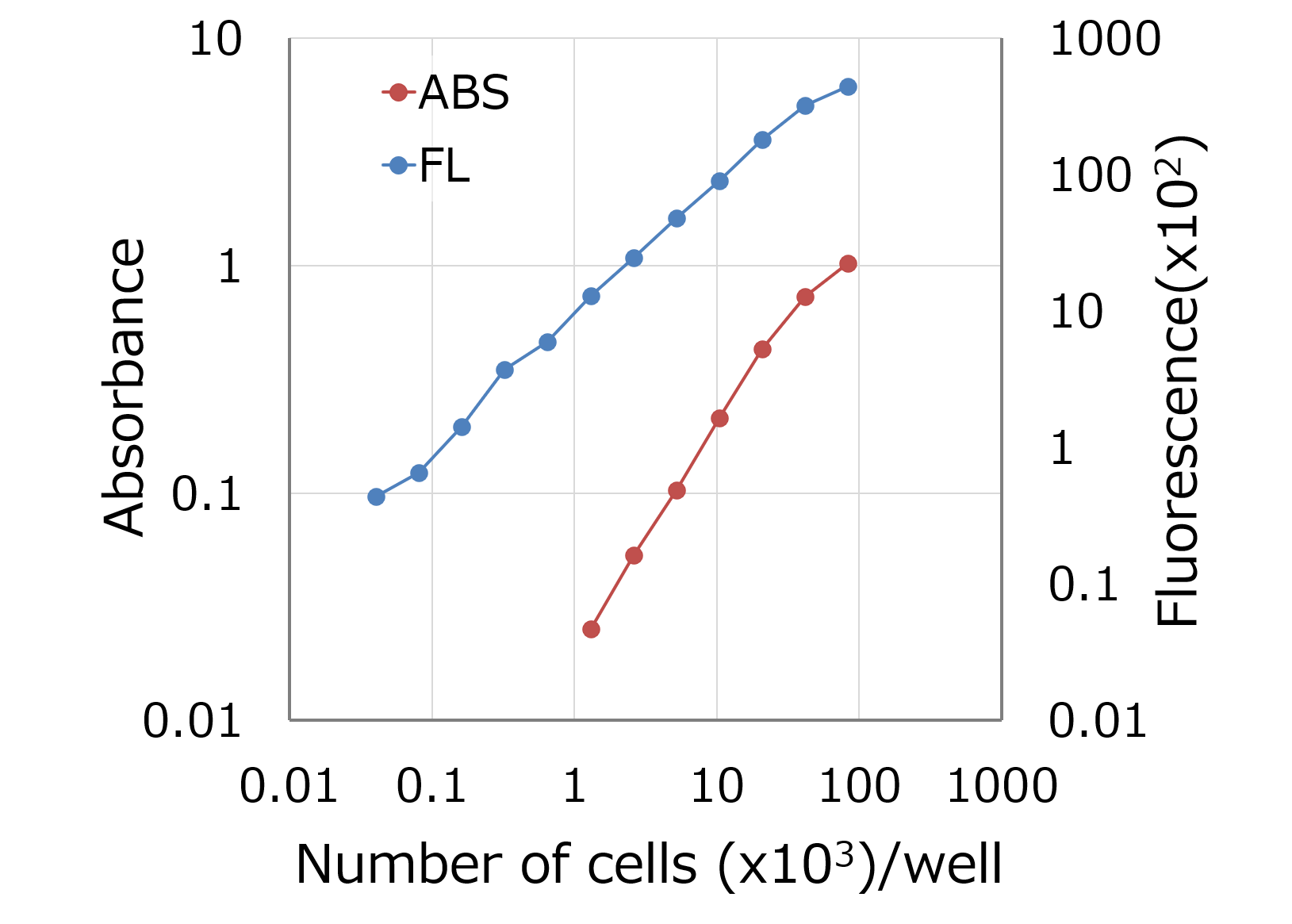
Two-fold serial dilutions of HeLa cells were seeded in a 96-well plate and incubated with the EzCyto Proliferation Kit for 3 hours. Absorbance (570/600 nm) and fluorescence (Ex 560 nm/Em 590 nm) were then measured. Fluorescence detection showed more than 20-fold higher sensitivity than absorbance detection, enabling detection of as few as several tens of cells.
Instruction Manual
Specifications
| WSE-7610 EzCyto Proliferation kit | |
|---|---|
| Kit Contents | EzCyto Proliferation Kit: 25 mL (10× concentrate) |
| Capacity | Approx. 2,500 wells |
| Detection Reagent | Resazurin |
| Detection | Absorbance: 570 nm / Reference: 600 nm Fluorescence: Ex 530–560 nm / Em 590–615 nm |
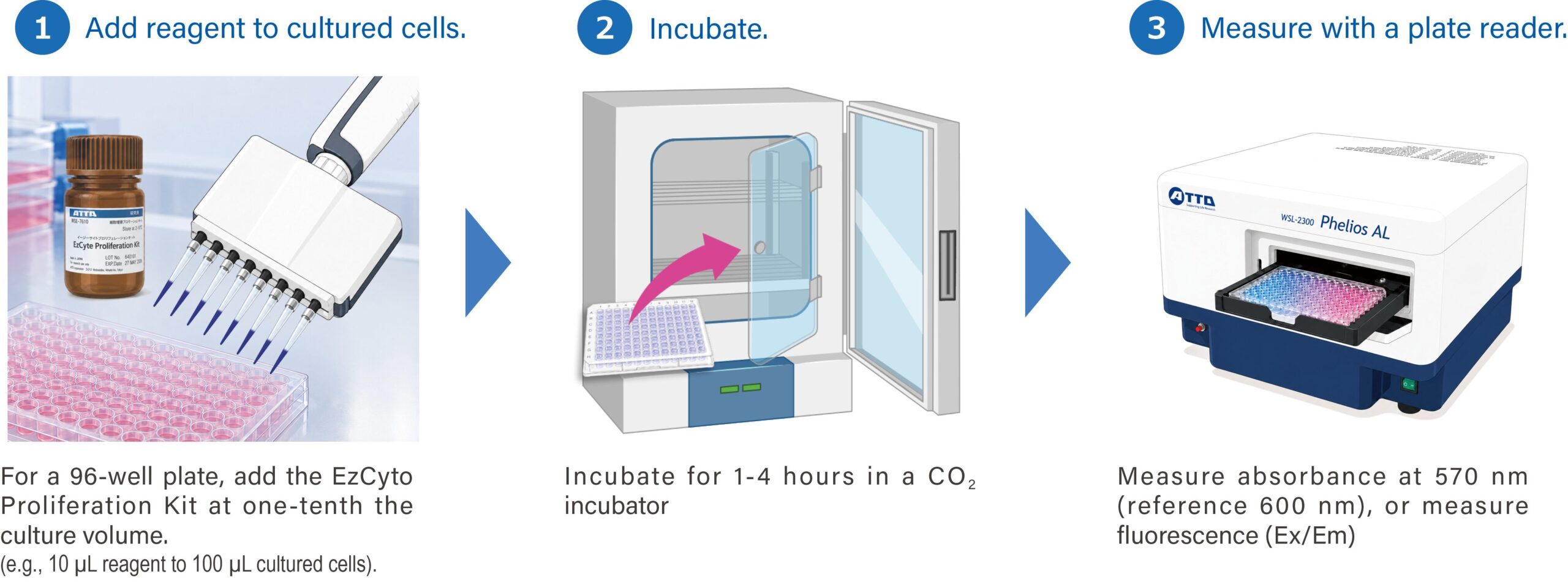
| Protocol | ① For a 96-well plate, add 10 µL of the reagent to 100 µL of cultured cells. ② Incubate for 1–4 hours in a CO₂ incubator. ③ Measure absorbance or fluorescence intensity using a microplate reader. |
| Applicable Samples | Mammalian cells, yeast, bacteria, and fungal cells (Gram-positive bacteria are not stained.) |
| Storage | Protected from light, refrigerated: 1 year from date of manufacture Protected from light, frozen: Approx. 6 months Freeze-thaw stability: Up to 10 cycles |
| Shipping Conditions | Refrigerated or frozen |
| Shelf Life | 1 year from date of manufacture (unopened) |
Ordering Information
| Code No. | Description | Unit |
|---|---|---|
| 2332440 | WSE-7610 EzCyto Proliferation kit | 1 pk |
Related products